
In the language of flowers, the amaryllis expresses pride and radiant beauty. Its upright stem and its large red or white trumpets opening in the middle of winter: everything about it asserts its presence. It is given to someone with character, or to salute a success to be proud of.
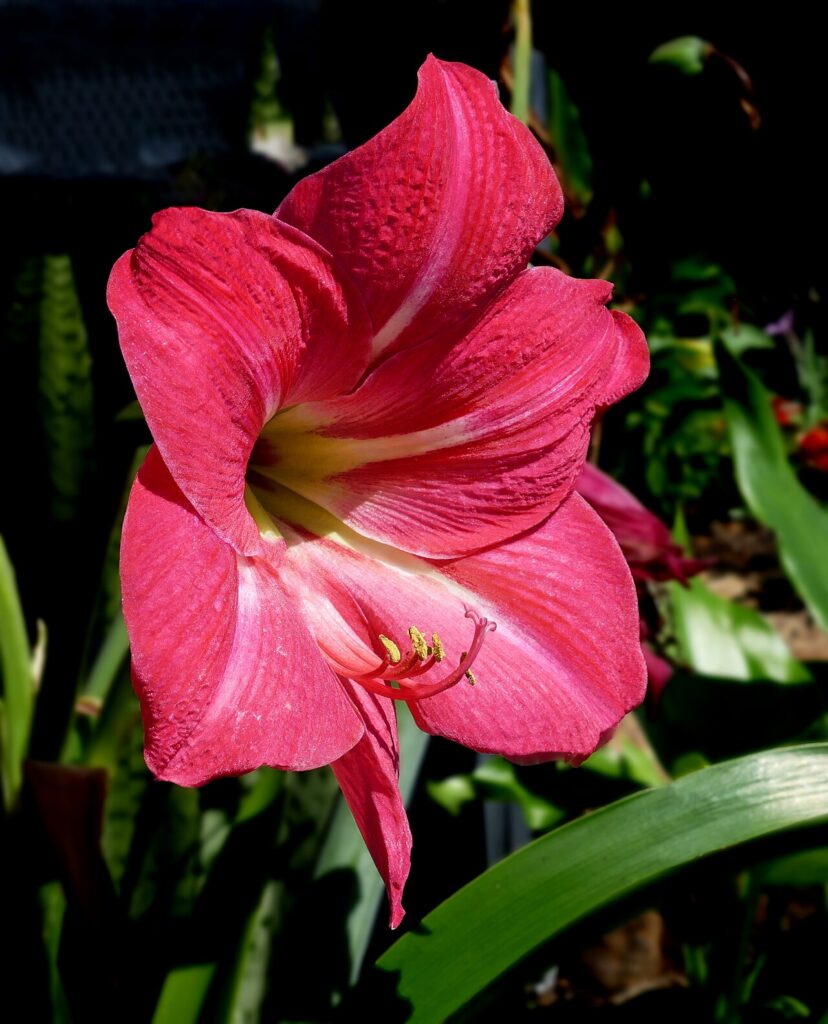
Credit: Jim Evans, CC BY-SA 4.0, via Wikimedia Commons
A shepherdess from Virgil
Its name comes from ancient poetry. Amaryllis is a shepherdess in Virgil’s Eclogues, a symbol of country beauty. A later legend tells that Amaryllis, in love with an indifferent shepherd, pierced her heart with a golden arrow at his door thirty nights in a row; from her blood was born a red flower so beautiful that the shepherd finally opened his door to her. From this story, the amaryllis keeps the meaning of a proud love that knows how to wait and how to be noticed.
The amaryllis bulbs sold for the holidays actually come from South America. Botanists place them in another genus, Hippeastrum, but the poetic name has stuck.
What the amaryllis says by color
Red amaryllis
It is the most common and the most expressive: it speaks of pride, a passion fully owned, a beauty that does not hide. It is the holiday amaryllis, in tune with the red of Christmas.
White amaryllis
It expresses pure beauty and grace. It suits a tribute, a birth or an elegant year-end celebration.
Pink or two-tone amaryllis
Softer, it speaks of tender admiration and joy. Varieties striped with red and white evoke the union of passion and purity.
When to give an amaryllis?
- At Christmas and New Year: a bulb given in early December blooms a few weeks later, like a promise kept.
- To congratulate someone on a success: a degree, a promotion, a project brought to completion.
- To someone you admire for their strength and self-assurance.
Which flowers to pair it with?
The red amaryllis goes with holly and fir branches for a holiday arrangement. White, it accompanies white roses in a bouquet of purity. With the lily, it makes a solemn tribute.
Find more flowers in our list of flowers from A to H.