
The lily is the flower of purity and nobility. White, it speaks of innocence and peace of the soul, and accompanies weddings and farewells; orange, it expresses pride, confidence and a burning passion; pink, tenderness; red, a love that dares. Flower of the kings of France and of the Virgin, it keeps something solemn in all its meanings.
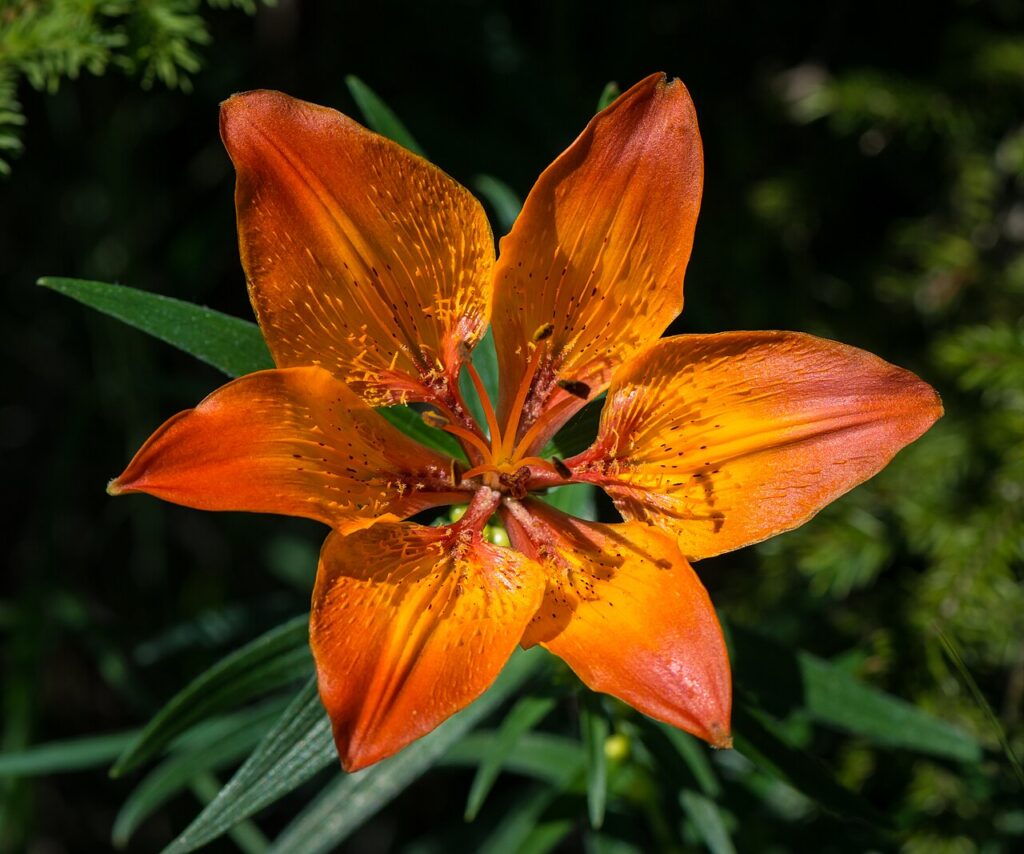
Credit: Uoaei1, CC BY-SA 3.0, via Wikimedia Commons
A sacred flower since antiquity
The Greeks said the lily was born of drops of milk fallen from Hera’s breast: hence its whiteness and its link with motherhood. In ancient Greece, a man gave a crown of lilies to the woman he loved to wish her a pure and fruitful life. The Romans made it a symbol of virginity and pure love.
Christian tradition took up this meaning. The white lily, also called the Madonna lily, is the attribute of the Virgin Mary: in paintings of the Annunciation, including Leonardo da Vinci’s, the angel Gabriel holds a lily stem in his hand. It stands for purity and promise.
What does the orange lily mean?
This is the color that intrigues people most. The orange lily carries a lively message: pride, self-confidence, desire and enthusiasm. It says “I believe in you” or “I am proud of you”, and can also express an ardent attraction, more flamboyant than tender.
Nineteenth-century tradition was harsher: some books made the orange (or tiger) lily the flower of pride, even of disdain. That meaning has largely faded, and the orange lily is now given to congratulate, encourage or celebrate a success. Its brightness suits energetic people and big occasions: a graduation, a new job, a victory.
The other lily colors
- White lily: purity, innocence, quiet majesty. The bride’s flower, it is also a flower of mourning: its serenity helps express grief while soothing those who remain.
- Red lily: the pride of love. Whoever gives it whispers “dare to love me”, like a challenge thrown down with tenderness.
- Pink lily: tenderness, affection, gentle admiration. It is given to a mother, a friend, someone you cherish.
- Yellow lily: cheerfulness and gratitude, with, according to old tradition, a touch of pride or vanity.
- Purple lily: dignity and refinement, a respectful affection.
The fleur-de-lis, emblem of the kings of France
The heraldic fleur-de-lis, three stylized petals bound by a ring, has adorned the coats of arms of the kings of France since the Middle Ages. According to tradition, it recalls the baptism of Clovis, to whom an angel is said to have brought a lily. Another explanation holds that it represents a marsh iris instead, which showed Clovis a ford to cross a river. Either way, it became the symbol of royalty, sovereignty and divine protection.
Quebec has kept it on its flag, and the city of Florence made it its emblem, in red on a white background. The meaning of the fleur-de-lis remains that of the lily itself: the nobility and purity of a promise.
The lily for a funeral
The white lily is one of the flowers most often given at funerals. Its message is not one of sadness, but of the soul’s peace regained and the purity of remembrance. Its powerful scent fills the room, like a presence that remains. For a grieving family, a bouquet of white lilies speaks of respect and compassion.
Giving lilies
The lily is a generous flower: each stem carries several buds that open one after the other, so a bouquet lasts a long time. Two precautions: remove the stamens as soon as the flowers open, because their pollen stains clothes and tablecloths; and do not give lilies to people who have a cat, as every part of the plant is toxic to cats.
For a wedding bouquet, it pairs naturally with white roses. To congratulate, the orange lily goes well with the sunflower and the iris, messenger of good news.