
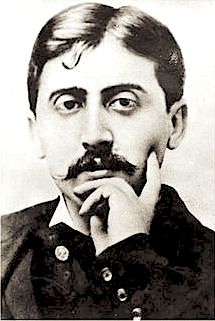
Few novelists have given flowers as much room as Marcel Proust. In In Search of Lost Time, flowers are not decoration: they reveal characters, mark social worlds and, above all, bring memories back to life. Reading them closely is one of the keys to the novel.
The hawthorns of Combray
In Swann’s Way, the young narrator stops for a long time in front of the hawthorn hedges along the path near Combray. He tries to understand the emotion they give him, comes back to them again and again, and finds the same flowers decorating the altar of the church during the month of Mary. The white hawthorn, and then a pink one that delights him even more, become linked to his first awakening to beauty and, a little later, to his first glimpse of Gilberte.
In the language of flowers, hawthorn speaks of hope. In Proust, it is the flower of a childhood wonder that the adult will try all his life to recover.
Odette’s cattleyas
Odette de Crécy, the woman Swann falls in love with, is surrounded by orchids. She wears cattleyas on her dress, and it is while adjusting them, one evening in a carriage, that Swann dares his first caress. From then on, the lovers say “faire catleya”, “to do a cattleya”, for making love: a private language born of a flower.
The orchid, rare and costly in Proust’s day, suits Odette perfectly: a flower of luxury and seduction, a little artificial, chosen to be noticed. Odette also fills her drawing room with chrysanthemums and Japanese objects, following the fashion of the time.
Young girls in flower
The title of the second volume, In the Shadow of Young Girls in Flower, turns the girls of Balbec, Albertine among them, into a living bouquet seen against the sea. For the narrator, they are first a group, like flowers on a hedge, before each one stands out. The image says both their freshness and how fleeting this moment of youth is.
Flowers and memory
The most famous scene of the novel is not about a flower but a madeleine dipped in tea. Yet Proust compares the return of memory to a Japanese game: small pieces of paper dropped into a bowl of water, which unfold into flowers, houses and people. All of Combray, he writes, rises in the same way from his cup of tea.
This is the deepest meaning of flowers in Proust: they are carriers of memory. A scent, a color, a hedge in bloom is enough to bring back a whole past.
Reading Proust with flowers in mind
When a flower appears in the novel, it is worth asking a few questions. Is it wild or grown in a hothouse? Is it in bud, in bloom, or faded? Does the character pick it, wear it, or simply look at it? The answers often say more about the person than a long portrait.
For the meaning of the flowers mentioned here, see our pages on the orchid, the chrysanthemum and the camellia, another flower of nineteenth-century Paris, and our article on the origins of the language of flowers.