
A funeral bouquet speaks for those who cannot find the words. It accompanies a last thought, supports a family, expresses the affection you had for the person who has died. The choice of flowers matters more than their number: a small arrangement chosen for its meaning touches as much as an imposing wreath.
Flowers of remembrance
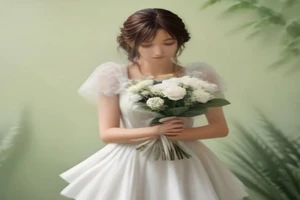
The white lily is the most fitting flower: its serenity speaks of peace and the purity of the soul. It appears in many funeral arrangements.
The white rose expresses respect and remembrance. The red rose speaks of a love that does not end; it is best suited to a spouse or children. The white carnation speaks of faithfulness and pure affection, the violet of the quiet thought you keep for the one who has gone.
The chrysanthemum, a flower of graves in France
In France, the chrysanthemum has become the flower of graves and of All Saints’ Day. It lasts a long time on a grave, which explains its place in cemeteries. On the other hand, the French avoid bringing it to the family’s home or giving it on other occasions. Elsewhere, its meaning is quite different: in Japan, it is a flower of honor and nobility, and in the United States it is above all a cheerful autumn flower.
Expressing tenderness or hope
Some flowers soften the message. A pink lily speaks of tenderness, for a loved one you cared for without always saying so. The iris carries a message of hope and faith. The forget-me-not has kept its name: it is perfect for a spray laid by grandchildren. Finally, the white hydrangea expresses a sincere and sober affection.
Matching the colors to the message
White dominates, because it speaks of peace and respect. Mauve and purple evoke contemplation. Red, more intimate, is kept for those closest. Bright colors are not forbidden: for a cheerful person who loved their garden, a luminous bouquet can be the most beautiful tribute.
A few words to go with the flowers
A card with a few words completes the message of the flowers. There is no need to look for a set phrase: the first name of the person who has died, a memory, “we are thinking of you” are enough. The language of flowers does the rest.
For the meaning of each flower, see our index of flowers.