
In the language of flowers, the petunia has an unexpected meaning: it expresses anger, or the need to talk things through. Giving a petunia says “something is wrong between us, let’s talk about it”. But tradition also lends it the opposite message: that of a soothing presence. The petunia is the flower of restless hearts looking for peace.
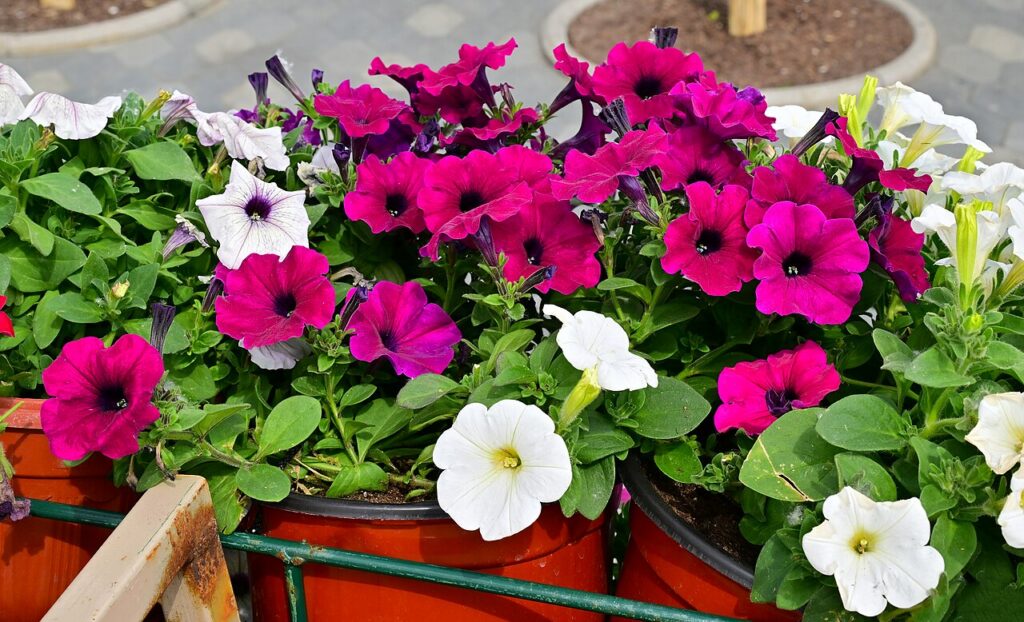
Credit: Юрий Д.К., CC BY 4.0, via Wikimedia Commons
A window-box flower with a sharp message
Nothing in the way it spills over balconies all summer suggests that the petunia carries such a lively message. Native to South America, it blooms generously from May until the first frosts and needs little care: it is one of the most common plants in window boxes, often alongside the geranium.
Its name comes from a word of the Guaraní peoples, petun, which meant tobacco, because the two plants are cousins. Perhaps this kinship with smoke is what earned it its reputation for a flammable temper.
Petunia and anger: a call for dialogue
The petunia’s first meaning is resentment. It is given to let someone know you hold something against them, or, more subtly, to ask them why they hold something against you. In both cases, the flower opens the discussion. It says: “we need to clear the air”.
This message is not as negative as it seems. Choosing a flower to express anger, rather than hurtful words, is already a gentle way of approaching a conflict. If you receive a petunia, ask yourself whether there is a misunderstanding to clear up; if you give one, be ready for a frank explanation. Whatever the outcome, you will know where you stand.
The petunia, a soothing presence
Other, more recent interpretations keep the flower’s other face: its calm abundance, its flowering that never stops. The petunia then says “your company soothes me” or “I feel good near you”. This reading makes it a possible gift after a quarrel: you acknowledge the past anger and offer peace regained.
The same petunia can therefore open a quarrel or close it. It is the context, and the short note that comes with it, that gives the key.
What does each petunia color mean?
- Purple petunia: charm, whimsy, a slightly mysterious attraction.
- Pink petunia: gentleness, affection without ulterior motives, reconciliation.
- White petunia: sincerity and peace; white takes most of the anger out of the petunia.
- Red petunia: a strong feeling, passion or anger depending on the circumstances.
- Yellow petunia: friendship, cheerfulness, the wish to turn the page.
The black petunia
Almost black petunias, with petals of dark velvet, appeared in gardens only recently. They fascinate as much as they intrigue. In the language of flowers, black evokes mystery, depth of feeling and sometimes mourning. A black petunia can speak of a smoldering anger, a sorrow kept to oneself, or simply a taste for elegance and the unusual. Paired with white petunias, it creates a play of contrasts that speaks of balance between shadow and light.
The spiritual symbolism of the petunia
A flower of summer and abundance, the petunia is often read as a symbol of resilience: it keeps flowering despite heat, wind and storms. Inwardly, it invites you to acknowledge your anger in order to free yourself from it, rather than letting it smolder. It is a flower that pushes toward sincerity, with others as with oneself.
Should you give a petunia?
For yourself, without hesitation: a window box of petunias is a joy all summer long. For others, it is better to know the message. If the recipient is not familiar with the language of flowers, they will see only a pretty plant; if they are, they will look for the hidden anger. A note slipped into the pot will remove any doubt.
For an unambiguous message of reconciliation, lavender, the flower of tenderness and humility, or a white rose, a symbol of peace, will be clearer.